Supplement 1.12: Photomultipliers (3/3)
The following image shows the R1635 from the Japanese manufacturer Hamamatsu as an example of a head-on photomultiplier.
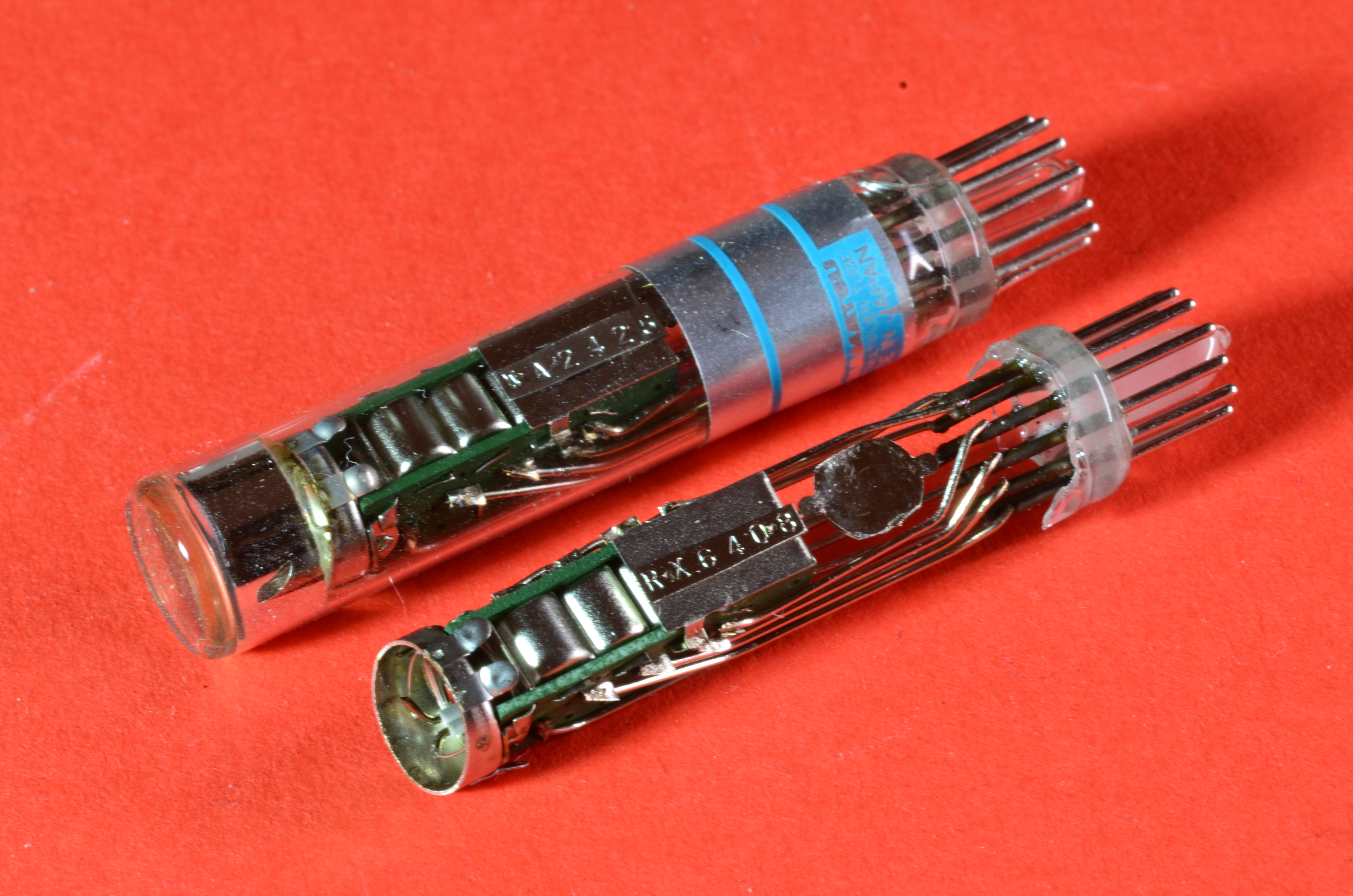
The R1635 is one of the smallest head-on photomultipliers available: it has a diameter of 10 mm and a total length of 45 mm. It features a semi-transparent bialkali photocathode with a diameter of 8 mm and eight dynode stages. The signal rise time is typically 0.8 ns, and the electron transit time is 9 ns. It is therefore approximately twice as fast as the 1P28 type shown on the previous page.
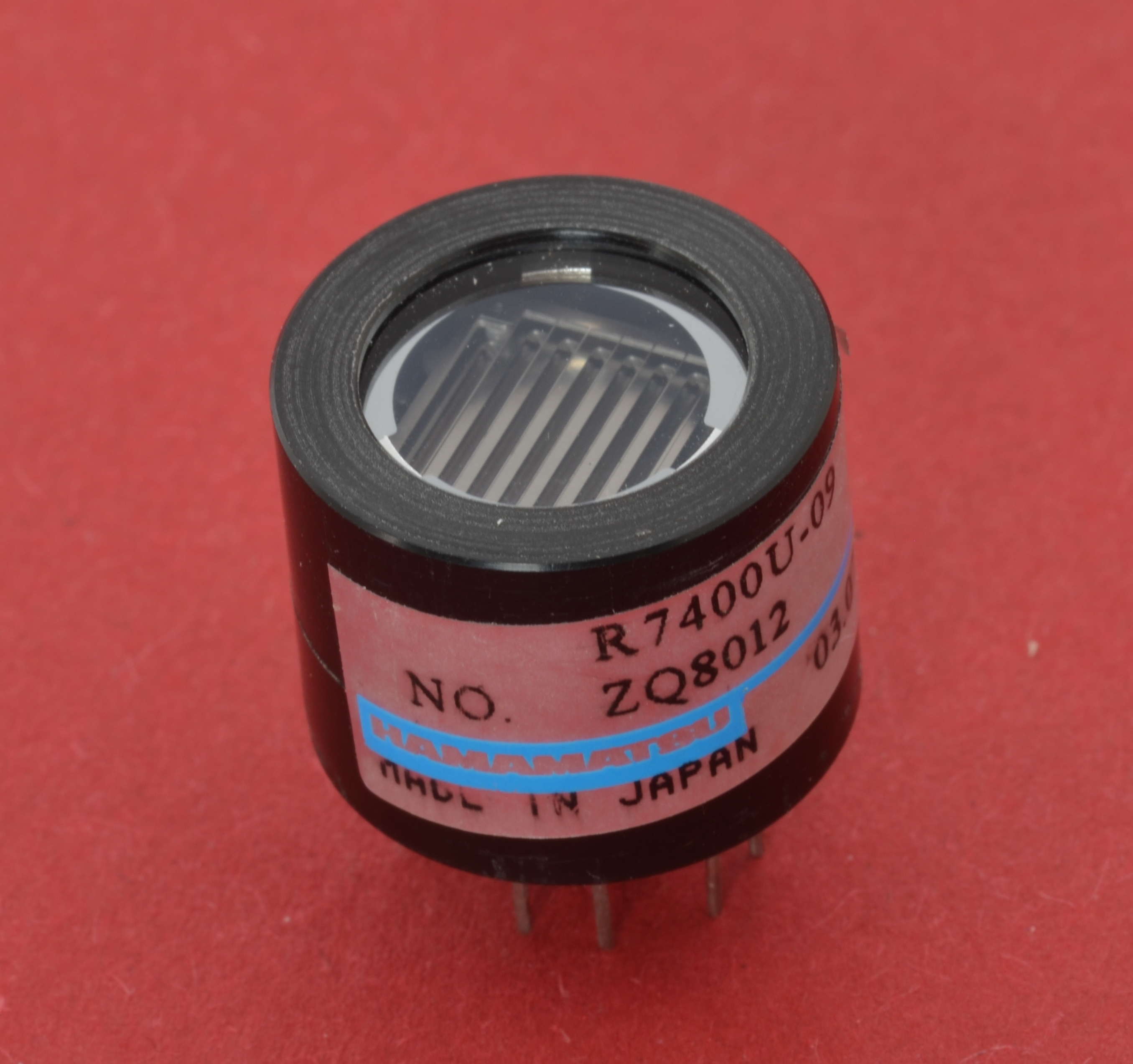
Another very small model is the R7400U-09 shown below, manufactured by Hamamatsu in Japan. It has a diameter of 11.5 mm and a total length of 15.9 mm. It features a solar blind photocathode made of Cs-Te and also has eight dynode stages. Several variants of this design are available with photocathodes for different spectral sensitivities.
Literature
There are several authoritative company publications on the subject of photomultipliers. These include
- reports from RCA and its successor company BURLE, where the first commercially available versions were developed, as well as
- the book *Photomultiplier Tubes* by Hamamatsu, which describes the latest technological developments and their applications.